


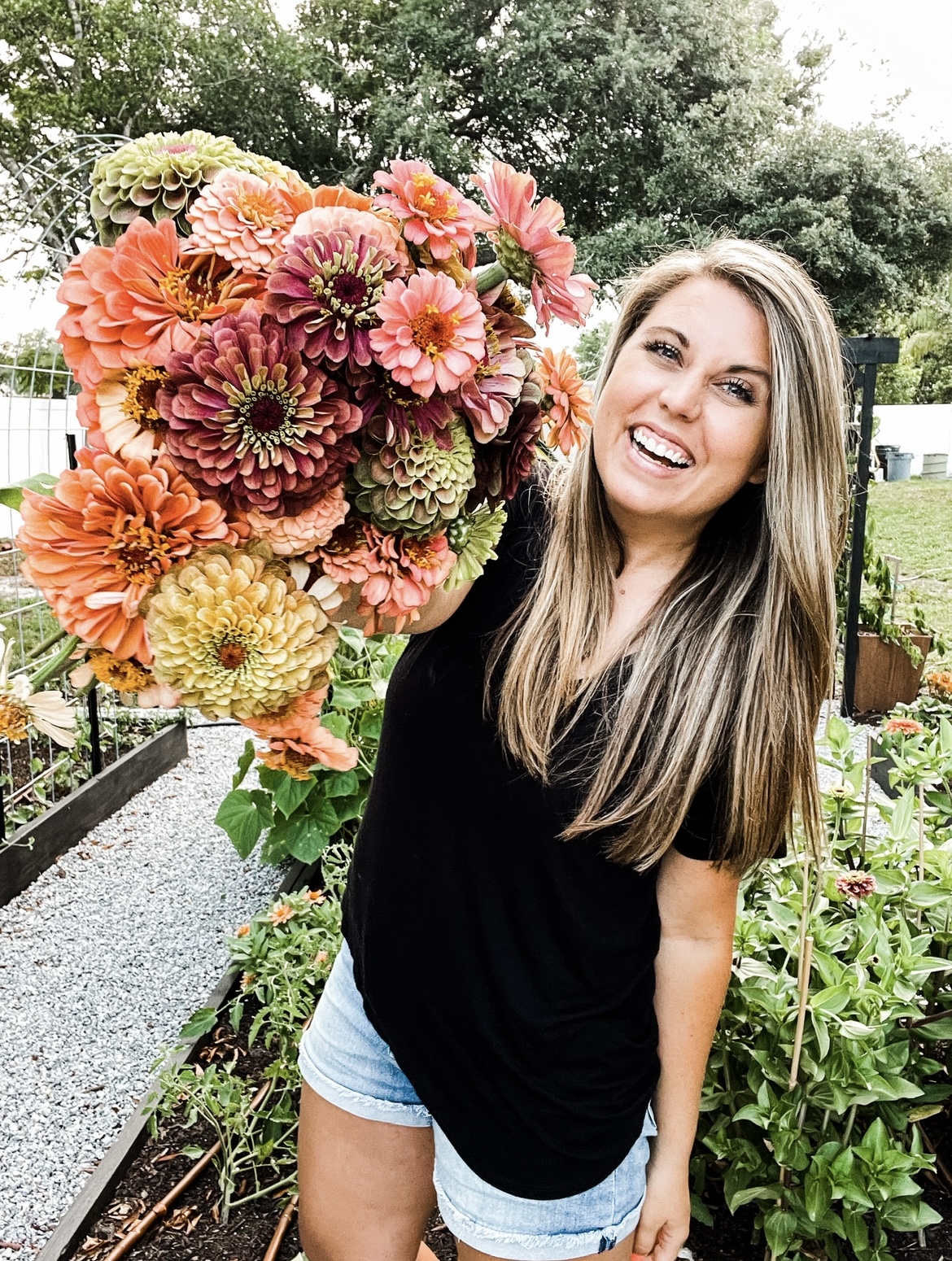
If you’ve ever stood in the garden section of a store holding one plant while questioning all your life choices, then this post is for you. I’ve been there and am on the other side. Now I can help you learn how to start a garden without getting overwhelmed.
Starting a garden sounds peaceful and exciting until suddenly you’re looking up soil types, sun exposure, watering schedules, what zone you live in, and wondering if you’ve already killed something you just bought.

Let me say this first:
You don’t need to know everything to start a garden. Let’s go ahead and get this out of our mind. Instead repeat this to yourself: You just need to start somewhere.
This isn’t a post about doing it perfectly. It’s about doing it simply, realistically, and in a way that doesn’t suck the joy out of it. This goes for if you’re dreaming of flowers, herbs, vegetables, or just one happy plant by the front door.
Shrink the Idea of “A Garden”
One of the biggest reasons gardening feels overwhelming is because we picture the final version. A lush, fully landscaped garden where everything is thriving all at once.
Instead, think smaller:
- One planter
- One garden bed
- One corner of your yard
- One windowsill
A garden doesn’t have to be a whole project. It doesn’t need edging, a layout, or a long-term plan. It can be a single container by your front door, a pot of herbs near the kitchen or a few flowers that make you smile when you pull into the driveway.
That still counts. And honestly? That’s usually how the best gardens start.

Start With Plants That Want to Live
Not all plants are created equal, some of seek attention constantly, and some are way more forgiving than others.
If you’re new, start with plants that:
- Tolerate missed waterings
- Don’t need constant pruning
- Are known to thrive in your climate
This isn’t the time to prove anything. Choose plants that want to survive with you, not ones that need babysitting. Pro tip: your local nursery is gold here to ask which ones to start with falling under these categories.

Observe Your Yard Before You Plant
Before buying anything, spend a few days noticing:
- Where the sun hits in the morning and afternoon
- Which areas get full sun vs shade
- Where water naturally flows or pools
You don’t need a diagram. Just awareness. Let the yard tell you what will work for planting instead of forcing a plan that fights it.

Use Containers as a Test Run
Containers are one of the easiest ways to start gardening without committing forever. It’s also a great way to figure out your favorite plants you’d like to commit to if you want to plant more of them. If something doesn’t work? You adjust. No big deal.
Why they’re great:
- You can move them if the light is wrong
- They help you learn watering habits
- They’re less intimidating than in-ground beds
- They let you experiment

Expect a Learning Curve (and Dead Plants)
This part really matters. Plants will die. Some won’t thrive no matter how much you try. Others will surprise you and grow like crazy when you least expect it.
That doesn’t mean you’re bad at gardening. It means you’re learning. Every gardener, even the confident ones, has killed plants along the way. Most just don’t talk about it. Gardening is a lot of trial and error, and the only way to figure out what works in your space is to try.
Sometimes a plant doesn’t like the sun. Sometimes it doesn’t like the soil. Sometimes it just wasn’t meant for that spot, and that’s okay. You adjust, you try again, and slowly you build confidence. Over time, you stop taking it personally and start seeing it as part of the process.

Think About How You Want the Space to Feel
Instead of asking:“What should I plant?”
Try asking: “How do I want this space to feel?”
Cozy? Calm? Lush? Playful? Low-maintenance? Let that guide your choices more than plant rules. One of my favorite ways to figure this out is by using Pinterest.
Create a board just for your garden and start saving anything that catches your eye. Don’t overthink it. After a bit, step back and look at what you’ve pinned. Are you saving lots of wild flowers? Structured hedges? Cottage-style gardens? Potted plants on patios?
You’ll start to see your “garden vibe” pretty clearly.
That vibe matters more than plant rules. When you choose plants and layouts based on how you want the space to feel, the decisions get easier and the garden starts to feel like yours, not something you’re trying to get right.

If You’re Feeling Stuck Before You Start
Here’s the simplest truth: You don’t need a perfect plan. You need momentum.
One plant leads to another. One success builds confidence. One small win makes the next step easier. Gardening doesn’t have to be overwhelming. It can be slow, imperfect, and joyful.
And that’s usually where the best gardens begin.