


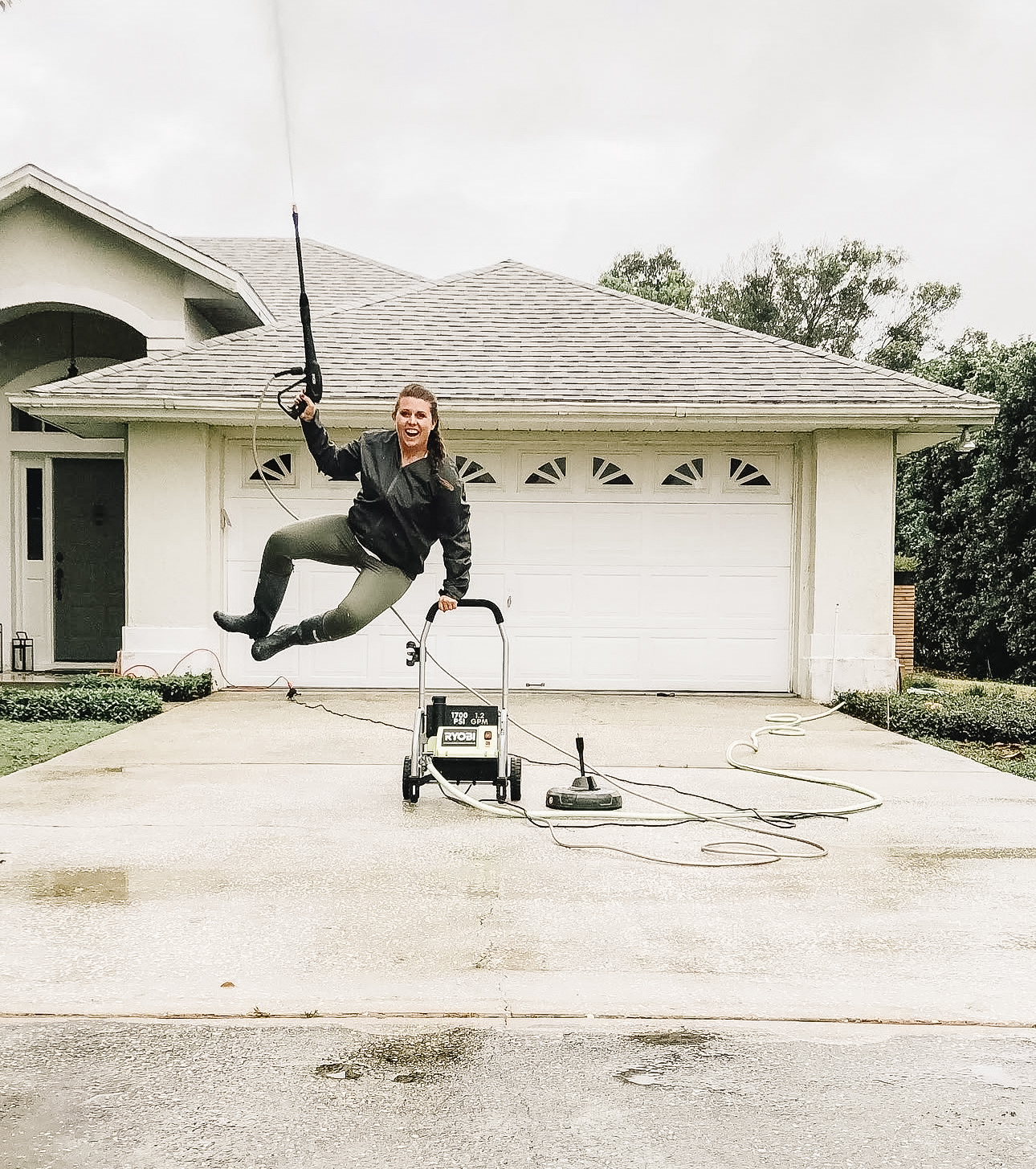

Spring is just around the corner, and you know what that means? Time to blast away all the grime and gunk that winter left behind. And what’s our secret weapon? You guessed it – the mighty pressure washer! There are so many uses for a pressure washer – many that you’ve probably never thought of.
Now, if you’ve never used a pressure washer, let me tell you, it’s like holding a magic wand. You’re zapping away dirt with water in seconds. And the best part? It’s super user-friendly and gives you that oh-so-satisfying instant gratification as you watch the dirt literally wash away.
There are also so many ways to use a pressure washer around your property, from cleaning your siding to cleaning your car (and tons of uses in between). If you want to make spring cleaning easy, keep reading for my best power washing tips.
But before we dive into the fun stuff, let’s cover some basics to ensure we’re all playing it safe and getting the most out of our cleaning crusade. First off, always wear protective gear. Think goggles and closed toe shoes. And remember to start with a lower pressure setting and gradually increase it to avoid any damage.

Pressure Washer Basics: Types of Pressure Washers & Attachments
Gas vs. Electric Pressure Washers
If you’ve ever looked at pressure washers and thought, “Wait… which one do I actually need?” then you’re not alone.
Here’s the simple breakdown:
- Electric: Lightweight, quieter, and super easy to use (just plug in and go). Perfect for everyday cleaning like patios, furniture, fences, and cars.
- Gas: More powerful and cordless, making it great for bigger projects like driveways, siding, and heavy-duty buildup—but it’s louder and requires a bit more maintenance.
What I personally use:
I use an electric pressure washer for most of my projects because it’s quick, easy, and does everything I need for regular home cleaning. It’s also way less intimidating—which means I actually use it more. If I were tackling larger areas or tougher stains more often, I’d definitely reach for a gas one. But for everyday use, electric keeps it simple (and way more enjoyable). These are my favorite:

PSI Levels of Pressure Washers
Diving into the world of pressure washers, it’s key to understand the role of PSI, or Pounds per Square Inch, which measures the pressure exerted by the water. Different tasks call for different PSIs, so let’s break down what you need to know to choose the right pressure washer for what you’ll need it for:
Light-Duty (1,300 – 1,900 PSI)
Perfect for those smaller, more delicate tasks around your home. Some of the most common uses for a pressure washers with lower PSIs include:
- Outdoor Furniture: Safely spruce up plastic or patio furniture without causing damage.
- Vehicles: Gentle enough for cars, bicycles, and motorcycles, ensuring a thorough clean without harming the paint.
- Small Patios and Balconies: Keep smaller outdoor areas fresh without the risk of eroding grout or harming surfaces.
Medium-Duty (2,000 – 2,800 PSI)
Stepping up the power, medium-duty pressure washers are great for a variety of tasks, offering a balance between strength and care:
- Fences: Perfect for blasting away mildew and dirt, leaving your fence looking new.
- Sidewalks and Driveways: Remove tougher stains and buildup, revitalizing the paths around your home.
- Decks: Clear away weather-related wear and tear, prepping your deck for a new season of outdoor living.
Heavy-Duty (2,900 – 3,300 PSI)
When you’ve got some serious grime to tackle, a heavy-duty pressure washer brings the muscle:
- Exterior Siding: Strip away years of dirt and algae, especially on more resilient materials like vinyl or brick.
- Stubborn Stains on Concrete: Deep-clean large driveways or garage floors, removing oil stains and embedded dirt.
Extra-Heavy-Duty (3,400 PSI and above)
For the toughest jobs that require professional-grade power, these pressure washers are up to the challenge:
- Paint Stripping: Ready to repaint? Blast off the old layers safely and efficiently.
- Graffiti Removal: Erase unwanted paint and markings from walls and public spaces.
- Commercial Cleaning: Ideal for large-scale or industrial cleaning tasks that demand high power.
Selecting the right PSI for your cleaning needs not only ensures effectiveness but also prevents damage to your property. Always start with the lowest setting that you think will get the job done and test a small, inconspicuous area first. This way, you can enjoy the cleaning power of your pressure washer without any worries.

Choosing the Right Nozzle for the Pressure Washer
One of the coolest things about pressure washers is the versatility they offer, thanks to the different nozzles you can attach. Each nozzle has a specific angle that dictates the water flow’s intensity and spread. So, choosing the right one can make a world of difference in your cleaning game. Let’s break it down real quick:
- 0-degree nozzle (Red): This nozzle is super focused and intense. It’s like the laser beam of nozzles, perfect for those stubborn stains on hard surfaces. But handle with care because it’s powerful!
- 15-degree nozzle (Yellow): Think of this as your go-to for stripping paint or cleaning concrete. It’s less intense but still means business.
- 25-degree nozzle (Green): Your everyday hero. Great for a wide range of surfaces, from decking to fencing. It’s like giving your outdoor space a gentle yet effective hug.
- 40-degree nozzle (White): The gentle giant. Perfect for windows, cars, and delicate surfaces. It’s all about the soft touch.
- Soap nozzle (Black): When you need to lather up before the big clean, this is your go to nozzle. It’s all about getting things nice and soapy for an even deeper clean.
Choosing the right nozzle is like picking the right tool for the job. It can make your cleaning more efficient and prevent any damage to the surfaces you’re cleaning. Plus, switching them out is a breeze, making you feel like a pressure-washing ninja, ready for any challenge that comes your way.

How to Use a Pressure Washer
When using a pressure washer, think of it as painting with water. You’ll want to use smooth, consistent strokes. Start from the top of the surface you’re cleaning and work your way down (or go side to side), maintaining a steady distance from the surface. This ensures an even clean and prevents streaks.
Now, let’s talk about the game-changer for those bigger jobs: the rotating surface attachment. This nifty gadget is like the turbo-boosted hoverboard of pressure washing. It’s designed to cover large areas quickly and evenly, thanks to its spinning jets. This means you can say goodbye to back-and-forth motions over the same spot and hello to efficiently gliding over your patios, driveways, or decks with ease. It’s like the difference between mowing your lawn with a push mower versus riding one – faster, smoother, and way more fun.
So, when you’re gearing up for your next pressure washing adventure, remember: smooth strokes with the wand and consider a rotating surface attachment for those expansive areas. It’s all about making the job easier, faster, and more enjoyable.

Where to Use a Pressure Washer
Now, onto the exciting part: where to unleash the power of your pressure washer. Let’s list the usual places to use one plus think outside the box and get our entire outdoor space sparkling.
- Driveways: They’re the first thing anyone sees. Cleaning your driveway removes unsightly tire marks, oil stains, and weeds, boosting curb appeal instantly.
- Sidewalks and Paths: These guide guests to your door. Removing dirt, algae, and moss not only makes them look welcoming but also safer by reducing slip hazards.
- Exterior of Your Home: Dirt, grime, and mildew can make your home look aged and uncared for. A pressure wash can rejuvenate your home’s siding, restoring its beauty and protecting its value.
- Patios/Decks: These are your havens for relaxation and entertainment. Cleaning them not only enhances their appearance but also extends their life by preventing rot and decay.
- Fences: A clean fence is like a frame for a masterpiece. It defines your property’s boundary and, when clean, complements your garden and outdoor aesthetics.
- Outdoor Furniture: Sun exposure and weather can leave outdoor furniture looking faded and grimy. A gentle pressure wash can bring back the vibrant colors and make them more inviting for you and your guests.
- Grills and BBQs: Nobody wants to cook on last year’s grime. Cleaning your grill ensures it’s sanitary, performs better, and your food tastes as good as it should.
- Vehicles: Washing your car or bike with a pressure washer is not only efficient but also helps prevent rust and corrosion by removing salt and mud from hard-to-reach areas.
- Garbage Bins: These can become breeding grounds for bacteria and emit unpleasant odors. A good wash keeps them sanitary and odor-free.
- Gutters: Clogged gutters can lead to water damage on your roof and walls. Cleaning them ensures proper drainage and protects your home’s structural integrity.


Using a pressure washer is like giving your home a mini-makeover. It’s incredible how a simple clean can transform your space, making it feel fresh and ready for spring. Plus, it’s a fun way to spend a sunny afternoon watching all that winter dirt just wash away, revealing the beauty underneath.


So, grab your pressure washer, and let’s make our outdoor spaces shine. It’s easy, it’s fun, and honestly, there’s something oddly satisfying about blasting away all that dirt. Happy cleaning, and here’s to a sparkling spring!
Pressure Washing FAQs (Quick Answers Before You Start)
Do I need a pressure washer or will a hose work?
A hose is great for rinsing, but a pressure washer actually removes built-up dirt, grime, and stains way faster (and way more satisfying).
Can a pressure washer damage surfaces?
Yes if you use too much pressure or the wrong nozzle. Always start low and test a small area first.
How far should I stand from the surface?
Start about 1–2 feet away and move closer as needed. Too close = potential damage.
Do I need detergent?
Not always, but it helps with tougher buildup like mildew, grease, or stains.
What’s the easiest thing to start with?
A driveway or sidewalk. They are both super forgiving and gives you that instant “wow” moment.
Is it hard to use?
Not at all. Once you get the hang of the trigger and motion, it’s actually kind of addicting.